
 Commercial grinder pumps are designed to handle larger volumes of wastewater and are used in larger buildings such as apartments, schools, and hospitals. These pumps are typically larger and louder than residential grinder pumps. These pumps are generally 208-230 volt and higher.
Low Voltage Landscape Lighting Setup for Beginners
Transform your yard with our easy DIY guide. Learn how to plan, install, and enjoy low voltage landscape lighting without the cost of a professional.

A sewage pump is a type of pump used to move wastewater from homes and commercial buildings to the public sewer system or a septic tank. These pumps are designed to handle solids and other debris that may be present in the wastewater. Sewage pumps come in different sizes and styles, and they can be installed above or below ground.
Sewage pumps use impellers to move wastewater through the pump and into a discharge pipe. The impeller spins at high speed, creating a low-pressure zone that draws the wastewater into the pump. As the impeller rotates, the pressure inside the pump increases, forcing the wastewater out of the pump and into the discharge pipe.
There are several types of sewage pumps, including submersible sewage pumps, pedestal sewage pumps, and effluent pumps.


Sewage pumps offer several advantages over other types of pumps, including:
A grinder pump is a type of pump used to grind up solid waste and other debris before pumping it into the sewer system or septic tank. These pumps are typically used in residential and commercial applications where wastewater must be pumped uphill or over a long distance.
Grinder pumps use a spinning blade to grind up solid waste and other debris before pumping it into the sewer system or septic tank. The grinder pump is typically installed in a pit or basin below the ground, and the wastewater is pumped up and out of the pit through a discharge pipe. The grinder pump is designed to handle large volumes of wastewater and can pump uphill or over a long distance.
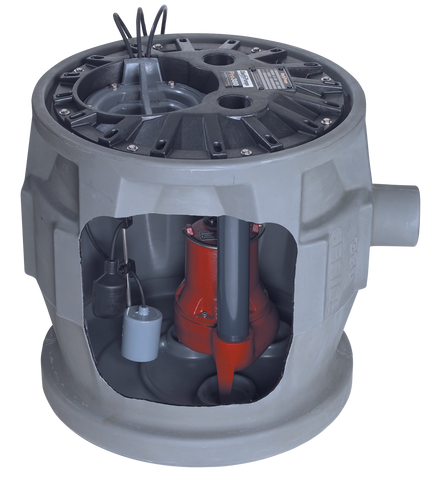
There are two main types of grinder pumps: residential grinder pumps and commercial grinder pumps.
Residential grinder pumps are typically used in single-family homes and small businesses. These pumps are compact and designed to handle smaller volumes of wastewater. They are also quieter than commercial grinder pumps. Residential Grinder Pumps are usable with 115 volt receptacles and 20 amp breakers, both of these requirements are standard in residential properties.
Grinder pumps offer several advantages over other types of pumps, including:
Sewage pumps are typically used in residential and commercial applications where wastewater must be pumped from a lower elevation to a higher elevation or over a long distance. They are also used in areas where the public sewer system is not available, and a septic tank is used for wastewater treatment.
Grinder pumps are typically used in residential and commercial applications where wastewater must be pumped uphill or over a long distance. They are also used in areas where the public sewer system is not available, and a septic tank is used for wastewater treatment. Grinder pumps are also used in areas where solid waste and other debris may be present in the wastewater.
Sewage pumps and grinder pumps are both used to move wastewater from homes and commercial buildings, but they differ in their function, design, and application. Sewage pumps are designed to handle solids and other debris that may be present in the wastewater, while grinder pumps are designed to grind up solid waste before pumping it into the sewer system or septic tank. When choosing a pump, it's essential to consider the application and specific needs of the system.
Transform your yard with our easy DIY guide. Learn how to plan, install, and enjoy low voltage landscape lighting without the cost of a professional.

Print this quick checklist to start your sprinkler system safely, test each zone, catch leaks, and set a smart spring schedule in under an hour.

Run each zone for a few minutes, write down what you see, and you’ll know exactly what to fix (and what parts to buy). Download our printable Zone Log and make your spring sprinkler start-up faster and more efficient.
{"one"=>"Select 2 or 3 items to compare", "other"=>"{{ count }} of 3 items selected"}
Leave a comment